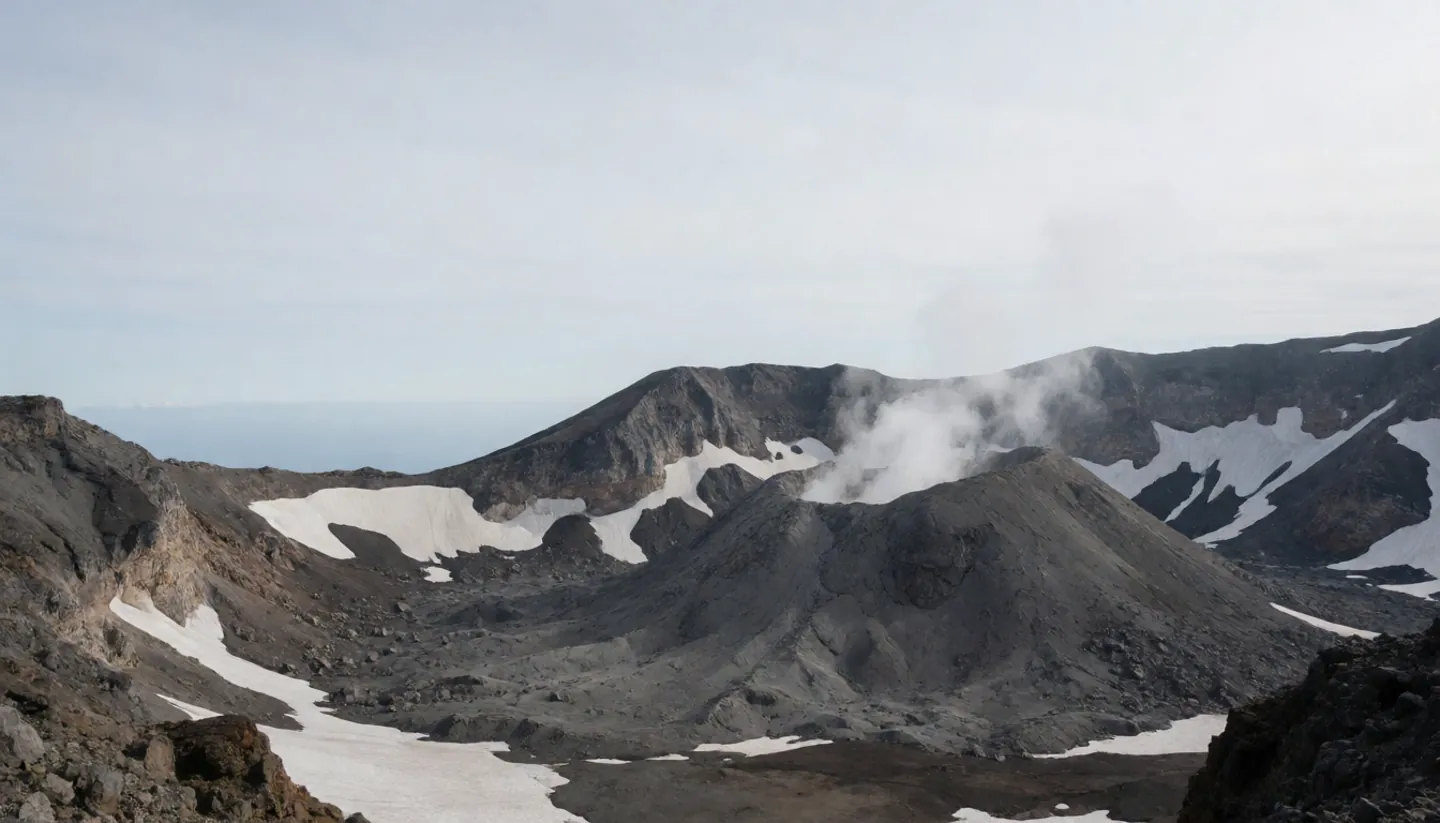
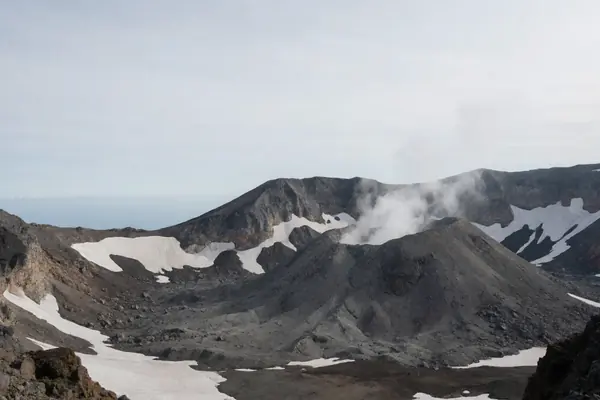
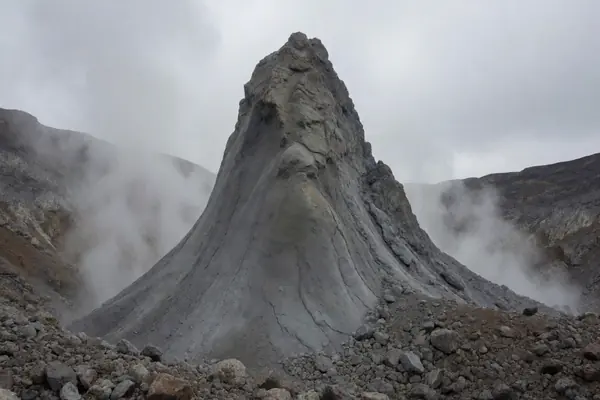
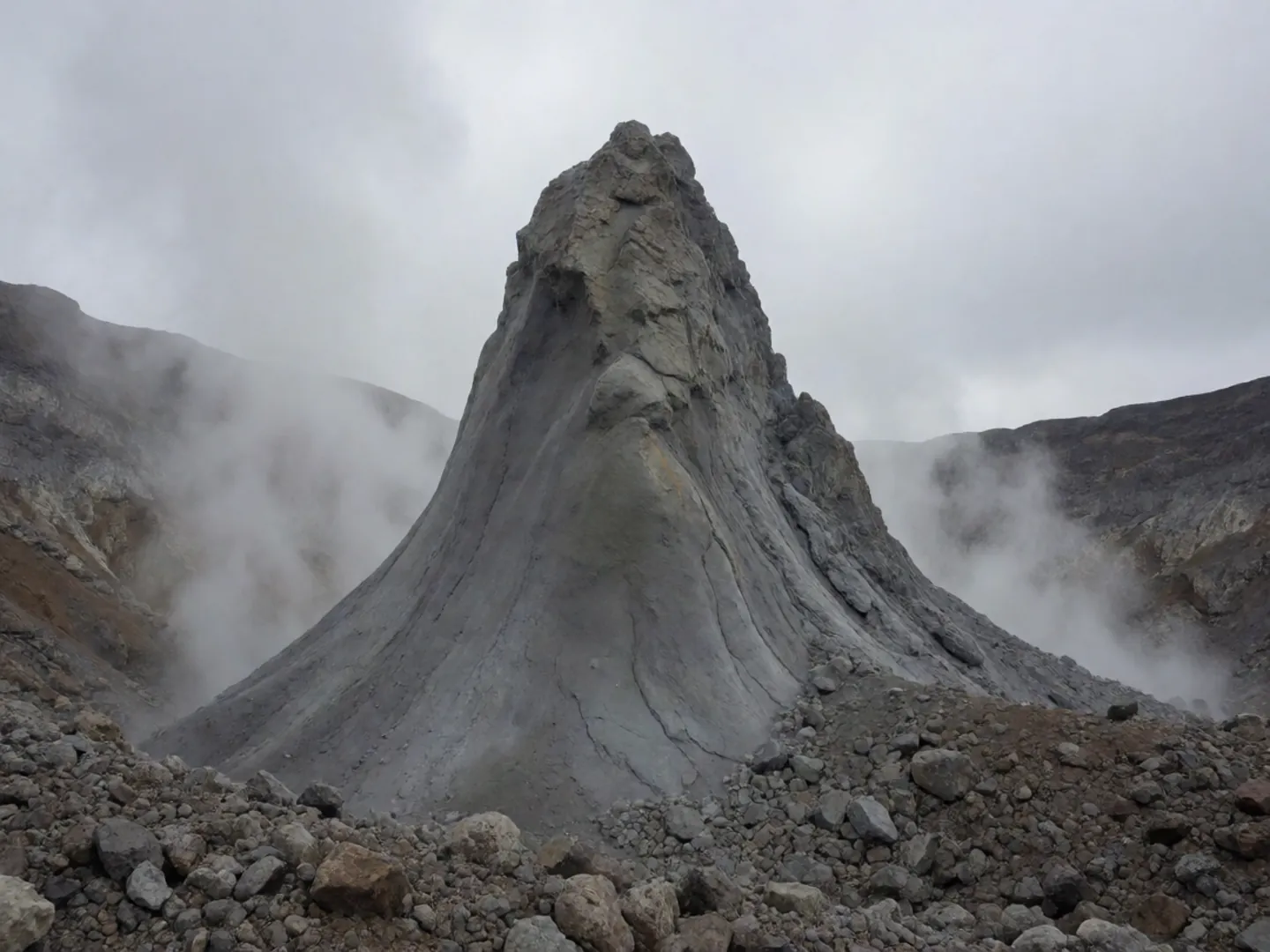
Runny basalt can travel long distances, but stiff, silica-rich lava cannot get far from the vent. It piles up into a steep-sided lava dome, sometimes pushing up solid spines. The British Geological Survey warns these domes tend to be unstable.
At Mount St Helens in 2004 to 2008, hot, solid, smooth-sided spines rose from the vent, bulldozed across the crater floor and piled up into a new dome.
Pick a type of lava or eruption to see how it behaves. The bar shows how viscous, or stiff, the lava is.
Based on the British Geological Survey's guide to volcanic hazards and the USGS Mount St Helens fact sheet.
TWO NUMBERS WORTH KNOWING
A dome built a truck at a time.
From the USGS account of the 2004–2008 dome-building eruption at Mount St Helens.
95 million m³
Size of the 2004–2008 lava dome
About 6.3 million large dump trucks' worth, very nearly the same as the dome that grew from 1980 to 1986. Together they doubled the lava on the crater floor.
VOLUME · USGS
0.67 m³ a second
Average lava extrusion rate
Slow and steady: over three years the spines piled up into a dome about 455 metres high, splitting the young Crater Glacier in two.
RATE · USGS
The USGS adds that Crater Glacier, squeezed by the growing dome, advanced about 1.5 metres a day during the eruption, compared with about 0.3 metres a day before.
FOUR THINGS DOMES TEACH
Slow is not the same as safe.
Lava itself rarely kills, because it usually moves slowly enough for people to leave. Domes bring other dangers, which is why scientists watch them closely.
Domes are unstable
BGS says they tend to collapse, causing fast pyroclastic density currents.
Flows move fast
Pyroclastic flows typically travel at 110 km/h or faster and can be 100 to 600°C.
Heat lingers
Deposits can stay above 400°C months later, and old dome rocks still steam.
Rain adds risk
Heavy rain can turn volcanic debris into lahars, mudflows like wet concrete.
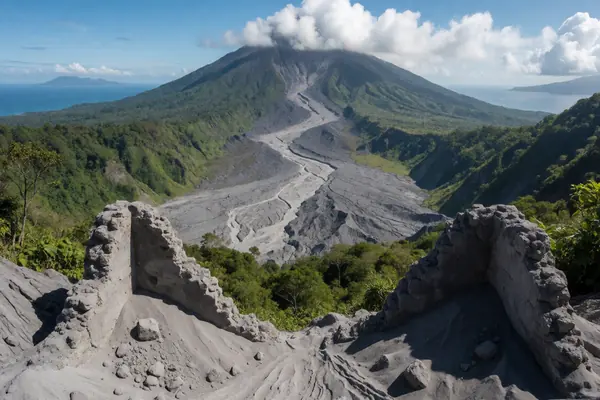
AI-generated image, not a photograph of a real person or place.AI-generated image, not a photograph of a real person or place.
MONTSERRAT
A dome over a capital town.
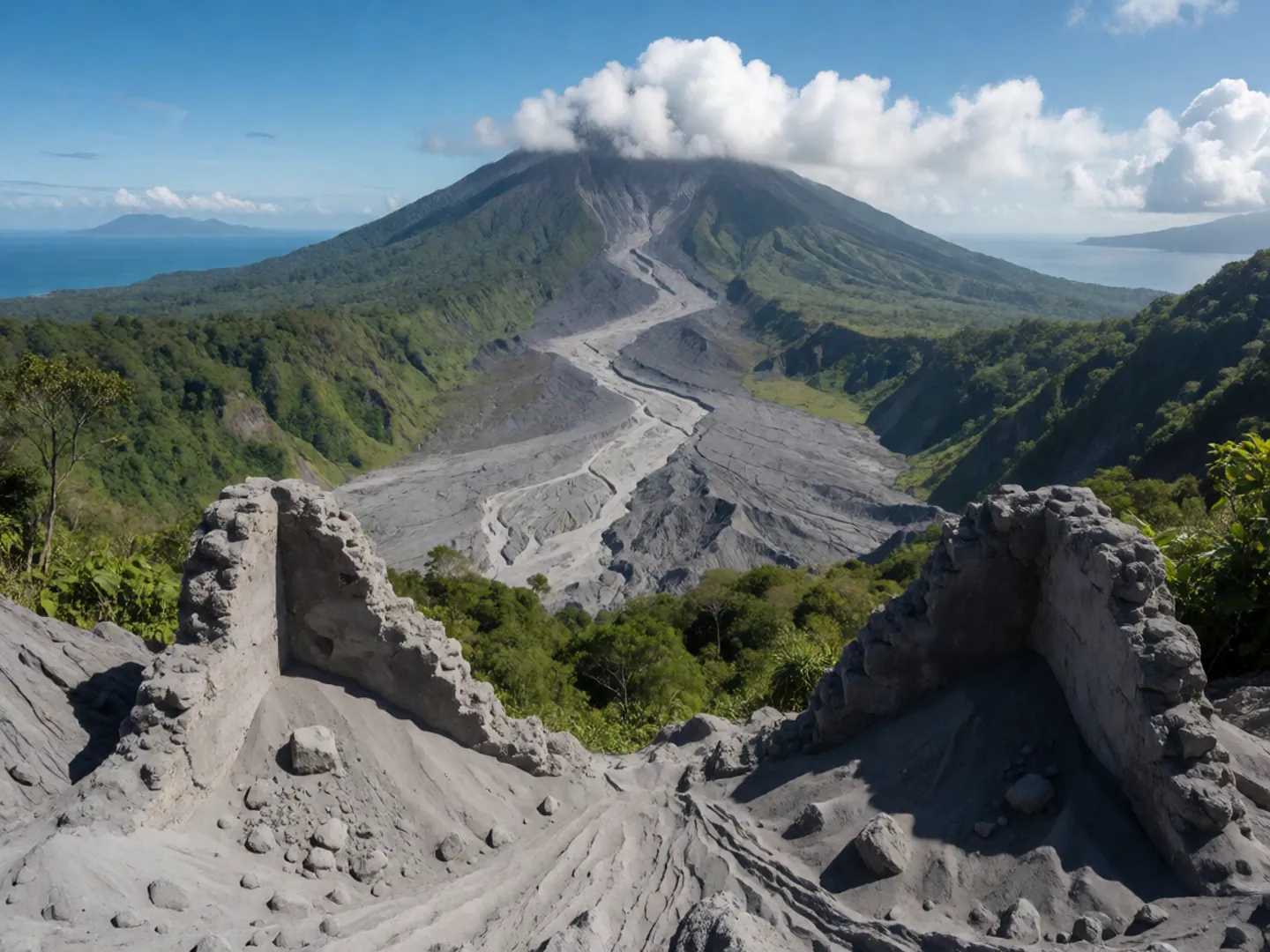
The Soufrière Hills Volcano on the Caribbean island of Montserrat began erupting in 1995. In June 1997 parts of its dome collapsed, sending pyroclastic flows towards a town, and the main town, Plymouth, was buried beneath pyroclastic flow material.
On Boxing Day 1997 an explosion caused a partial collapse: about 60 million cubic metres of dome and crater wall swept south as a debris avalanche, and the villages of St Patrick's and Morris were destroyed in less than 30 minutes.
Questions
Questions people ask
What is a lava dome?
A mound of lava that piles up over a vent because the lava is too viscous to flow far. BGS says domes form when high-viscosity lava is erupted slowly.
Why is some lava stickier than other lava?
Viscosity generally increases with silica content and decreases with higher temperature and water content. Silica-rich andesite is much stiffer than basalt.
What is a lava spine?
A column of hot, solid lava pushed up out of a vent. At Mount St Helens, spines rose, scraped against the vent walls and piled up to form the 2004–2008 dome.
Are lava domes dangerous?
They can be. BGS says domes tend to be unstable and can collapse, producing pyroclastic flows that travel at 110 km/h or faster.
Is Mount St Helens still active?
The USGS says hot dome rocks were still steaming years after the 2004–2008 eruption and that Crater Glacier continues to surround both domes.